Last Saturday, May 28, was Veer Savarkar’s birth anniversary. This great revolutionary was born in 1883 in Bhagur, a village near Nasik in Maharashtra.
A born genius that he was Savarkar had a rare talent in poetry and his poems were published by well known newspapers when he was hardly 10 years old. When he was just 16 years old, Savarkar formed a body named Abhinav Bharat whose principal objective was to drive out the British from India and attain complete political independence for the country.
I was 15 years old and just out of High School when a friend who had gone to Lahore bought for me an old copy of Savarkar’s book The First War of Independence, 1857. The book had cost Rs.28. which at that point of time was a huge sum.
Since my school days I have been an avid book- lover. If any one were to ask me to name two books which have had a lasting impact on my life I would readily identify a couple of books I read as a teenager – one that I read as a fourteen year old boy – Dale Carnegie’s How to win friends and influence people, and the second one that I read the following year – the highly inspiring saga by Savarkar referred to above.
Sind, in undivided India, was a part of Bombay Presidency. So, until 1947, there was no separate University for Sind. All colleges in the province were affiliated to Bombay University. But the first time in my life I visited Bombay (now Mumbai) was in 1947, after independence, and after being displaced from Karachi. I was in Bombay just for two days. The friend with whom I was staying asked me if I was keen to see any particular place in Bombay. “Please take me to meet Veer Savarkar“, I said to him. And he did take me to Savarkar’s Shivaji Park residence, where for some forty five unforgettable minutes, I sat in awe of his magnetic personality while he kept asking me about the condition of Hindus in Sind.
***
The British Government described Savarkar’s book as ‘incendiary’. The condemnatory epithet was actually an honour when used by a cruel colonial power that was so frightened that it banned the book even before its actual publication. The story of the journey of the book’s manuscript from India to England, France, Germany, Holland and back, and the role it played in inspiring revolutionaries after its clandestine publication, is as thrilling as any of the battles fought in 1857.
Savarkar wrote it in London, where he had gone to study law but soon got involved in revolutionary activities, when he was only 25. The original text in Marathi was completed in 1907, to mark the 50th anniversary of 1857, and was secretly sent to India. But it could not be printed in India because the British authorities, who had come to know of it, raided the printing press.
Miraculously, the manuscript was saved and sent back to Savarkar in Paris. His fellow-revolutionaries translated it into English but no printer in England or France was willing to print it. Finally it was printed in Holland in 1909 and copies of it were smuggled into India. But the author was arrested in London in 1910 on charges of sedition, brought to India, convicted for two life imprisonments, and transported to “Kala Pani”, the dreaded Cellular Jail in Andaman and Nicobar Islands. It was the same place where the British had deported thousands of patriots who had participated in the uprising of 1857. Savarkar spent 11 years in near-solitary confinement in a dark, dingy cell that overlooked the gallows where prisoners were routinely executed.
Though banned, the book went into several reprints. Madame Cama brought out the second edition in Europe. Lala Hardayal, a leader of the revolutionary Ghadar Party, brought out an edition in USA. It was printed for the first time in India in 1928 by Bhagat Singh and his comrades. Netaji Subhas Chandra Bose and Ras Behari Bose got it published in Japan in 1944, and the book became almost a textbook for the soldiers of the Indian National Army. Before the ban was lifted in 1947, Savarkar’s book was available in several Indian languages in the underground network. Thus, this was not a book written by an ordinary historian enjoying his comfort, safety and academic support structure, all of which he takes for granted. Rather, it was penned by a revolutionary who suffered unimaginable hardships for his activities and which in turn motivated countless other revolutionaries in their common goal of liberating India.
***
In keeping with its historical importance the Central Hall of Parliament House is adorned with the portraits of important national leaders.
Inside the Hall, in line with the passage connecting it with the Rajya Sabha Chamber, is a dais which is a permanent part of the Hall. In the arch overlooking the dais is the portrait of Mahatma Gandhi.
In the arches on the right and left side of the dais are the portraits of C. Rajagopalchari and Netaji Subash Chandra Bose. Besides, there are twenty gilt-edged rectangular picture frames provided in the wooden panelling of the Hall, containing the portraits of other national leaders. These panels display the portraits of Bal Gangadhar Tilak, Lala Lajpat Rai, Pandit Motilal Nehru, Indira Gandhi, Rajiv Gandhi, Sardar Vallabhbhai Patel, Chittaranjan Das, Dr.B.R.Ambedkar, Morarji Desai, Rabindranath Tagore, Sarojini Naidu, Chaudhary Charan Singh, Dr. Syama Prasad Mookerjee, Maulana Abul Kalam Azad, Dr. Rajendra Prasad, Dr.Rammanohar Lohia, Lal Bahadur Shastri, Pandit Jawaharlal Nehru, Pandit Madan Mohan Malviya and Dadabhai Naoroji. In the arch facing the dais is the portrait of Swatantryaveer Vinayak Damodar Savarkar.
******************
In case of every leader whose portrait is in Parliament’s Central Hall, the Lok Sabha Secretariat never fails to invite MPs to come to the Parliament House on his or her respective Birth Anniversary and pay floral tributes to that leader. For last Saturday also invitations were duly sent to all MPs. A notice was also published in Bulletin Part II of the Lok Sabha.
Quite a number of MPs were there. But from the Congress only one single MP was present, Hon’ble Speaker Smt. Meira Kumar. Since February 2003, when Swatantryaveer Savarkar’s portrait was first put up in the Central Hall and formally unveiled by the then President Dr. Abdul Kalam, the Congress Party has been boycotting all functions relating to this portrait including the first function involving the President himself!
This is singularly unfortunate, and I would like to urge the Congress Party to reconsider its stand.
When in 1966, Savarkar breathed his last, Smt. Indira Gandhi paid rich tributes to him and called him a great figure of contemporary India whose name was a by-word for daring and patriotism. He was cast in the mould of a classic revolutionary and countless people drew inspiration from him, she said. The then Vice-President, Dr. Zakir Hussain, in his homage to Savarkar said: “A great revolutionary as he was, he inspired many young men to work for the liberation of the motherland.”
I recall whenever there was a function in the NDA days, relating to Savarkar, Vasant Sathe was invariably present. He told me that during his tenure as I&B Minister a documentary on Savarkar was planned and some people raised objections. On Smt. Gandhi’s advice he brushed aside those objections and the documentary was made.
I recall that during NDA years Prime Minister Atal Bihari Vajpayee was requested to launch a feature film on Dr. B.R. Ambedkar. I also attended the opening function of the film at the Siri Fort Auditorium. Sitting by my side was Director, Jabbar Patel, with whom I had a brief argument.
My plea to him was: in order to project Dr. Ambedkar’s greatness was it at all necessary to project Gandhi as a ‘hypocrite’? After all, for millions in the country both are icons. Why not stress the positive attributes of both? And I mentioned to him the film I had seen on Gandhi and his son Harilal who became wayward because of his father’s sternness. The relations between father and son became so sour that it wasn’t an easy task to write a script fair to both. Yet Chandulal Dalal and Neelam Bhai Parekh who wrote the original book about Harilal Gandhi and Feroz Abbas Khan who directed the film and the play did it so wonderfully that the audiences were touched by the fair and sympathetic treatment of the plot. The name of the film was “Gandhi, my Father”; The play was titled, “Mahatma vs Gandhi.”
L.K. Advani
New Delhi
30 May, 2011
Vagish Issar (Ivsk) 09810068474
(sarve bhavantu sukhinah, sarve santu niramaya;
sarve bhadrani pashyantu, ma kashchit dukkh bhagbhavet}
Monday, May 30, 2011

Wednesday, May 18, 2011
Saturday, April 30, 2011
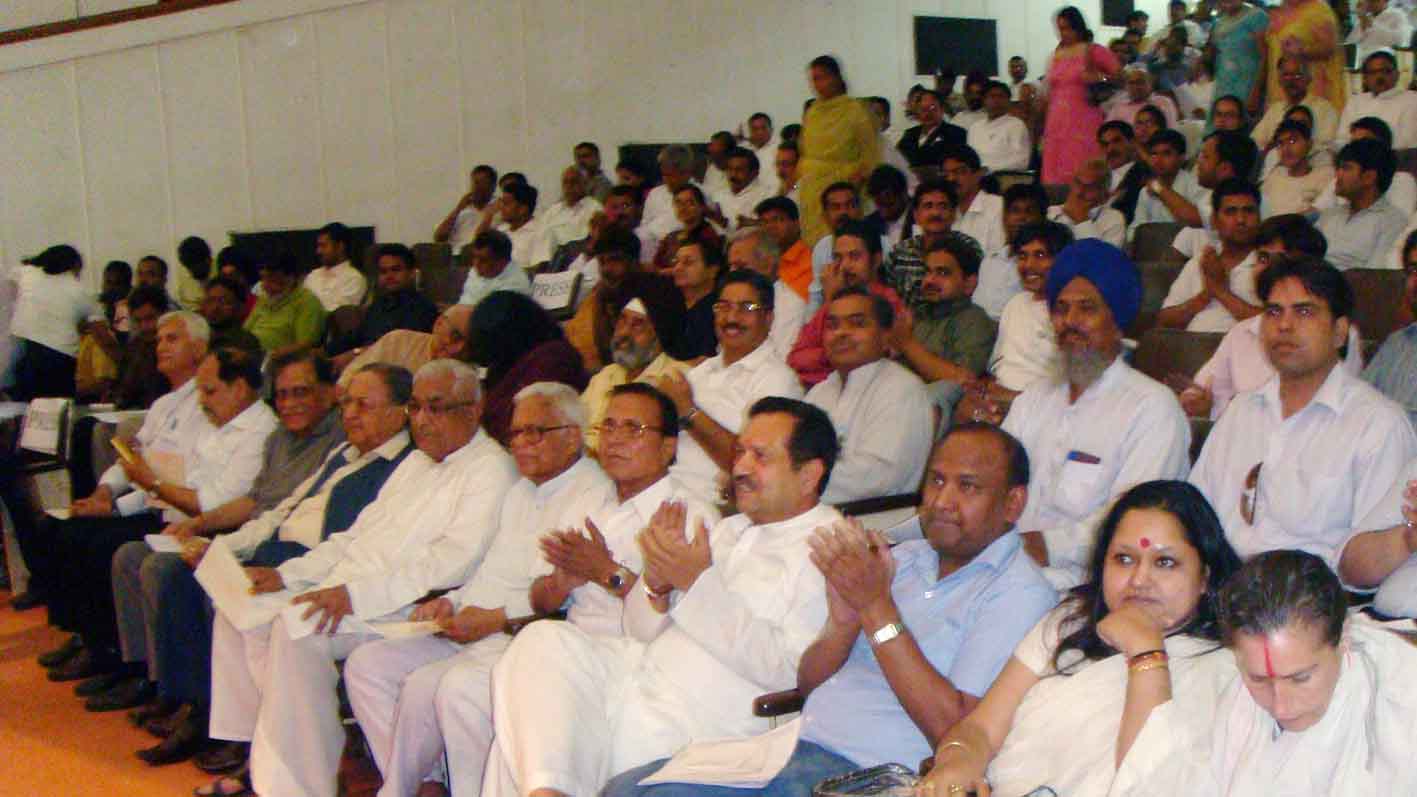
Function of Centre For Human Right And Justic at Mavalanker Hall New Delhi on 29.04.2011
ekuokf/kdkj dk mYya?ku vkijkf/kd U;k; ç.kkyh dk nq#i;ksx
29@4@2011 ubZ fnYyhA ns'k esas gks jgs ekuokf/kdkjksa ds mYya?ku ,oa vkijkf/kd U;k; ç.kkyh ds nq#i;ksx ij ekoyadj lHkkxkj ubZ fnYyh esa lEesyu vk;ksftr fd;k x;kA lsUVj QkWj g~;weu jkbV~l ,.M tfLVl ds rRok/kku esa lEié bl lEesyu esa oDrk ds :i iwoZ dsUæh; ea=h Jh lqczge.;e Lokeh] lk/oh mek Hkkjrh th] iwoZ dsUæh; ea=h ,o jk- eq- eap ls Jh vkfjQ csx th rFkk dk;ZØe ds v/;{k iwoZ dsUæh; ea=h Jh txnhi /kudj th mifLFkr FksA jk"Vªh; eqfLye eap ls vkeaf=r Jh vkfjQ csx us dsUæ esa lÙkk/kkjh ny }kjk eqLyekuksa dks fgUnqvksa ls vyx j[kus rFkk vius oksV cSad ds :i esa bLrseky djus dk vkjksi yxk;kA mUgksaus lEesyu esa vk, Jh bUæs'k dqekj th ds muds lkFk e/kqj laca/kksa ds ckjs esa crkrs gq, dgk fd tEew&d'ehj esa cxSj lqj{kk ds eqlyekuksa ds ?kjksa esa tkdj mUgsa jk"Vª ds lkFk tksM+us dk dk;Z dsoy baæs'k th gh dj ldrs gSaA iwoZ dsUæh; ea=h rFkk e/;çns'k dh iwoZ eq[;ea=h lk/oh mekHkkjrh viuh vktLoh ok.kh esa dgk fd Hkkjr foHkktu ds le; eqlyekuksa us Hkkjr esa vius vkidks ikfdLrku ls T;knk lqjf{kr eglwl fd;kA ;g lqj{kk dk Hkko mUgsa iqfyl] QkSt] dkaxzsl ikVhZ o usg: xka/kh ds dkj.k ugha feyk vfirq mUgsa fgUnqvksa ij iw.kZ fo'okl Fkk fd os muds chp lqjf{kr jgsaxsA Li"V gS fgUnqvksa ls chp jguk lcls lqjf{kr gS D;ksafd fgUnqRo esa lHkh ds çfr d#.kk o n;k dk Hkko gS pkgs og euq"; gks ;k i'kq i{khA lh-ch-vkbZ-] ,u-vkbZ-,] o ,-Vh-,l- fo'o'kuh;rk ij cksyus gq, mek Hkkjrh us dgk budh fo'oluh;rk ij loky jk-Lo-la?k us ugha yxk;k vfirq bu laLFkkvksa ds dk;ksZa ds mtkxj gksus ij ns'k ds çcq) yksxksa us yxk, gSaA mUgksaus dlkc vkSj lk/oh çKk flag ds lanHkZ esa ljdkj ij nksgjs ekinaM viukus dk vkjksi Hkh ykxkrs gq, dgk ,d vksj lSdM+ksa yksxksa dh gR;k esa 'kkfey fons'kh vkradoknh dlkc dks lkjh lqfo/kk,a fey jgh gSa ogha lk/oh çKk dks 'kq) is;ty o fpfdR;k lqfo/kk Hkh miyC/k ugha djokbZ tk jghA fØfeuy flLVe ds nq#i;ksx ij cksyrs gq, Jh lqczg~e.;e Lokeh us crk;k vkbZ-Vh- ds {ks= esa Hkkjr ds fodkl djus ds ckn ls fons'kh 'kfä;ksa dk ;g ç;kl rst gks x;k gS fd ns'k esa foHkktu fdl çdkj gksA blds fy, Hkkjrh;ksa esa Hksn Hkko ds cht cks, tk jgs gSaA oSKkfud 'kks/k esa fl) gks x;k gS fd lHkh Hkkjrh;ksa ds Mh-,u-,- ,d gh gS rks vk;Z ckgj ls vk, dSls gks ldrs gSa blh Hksn Hkko ds dkj.k Mh,eds tSlk ny cu x;k gS tks mÙkj Hkkjrh; ls æfoM+ksa dks vyx ekurk gSA if'peh bfrgkldkjksa us ljLorh unh] }kjdk ds vfLrRo dks udkj fn;k Fkk tcfd vk/kqfud fjeksV lsaflax rduhd rFkk HkwxfHkZd v/;;u esa budk vfLrRo çekf.kr gqvk gSA jkelsrq dks ,sMe fczt dk uke ns fn;k x;k Fkk dqN /keZfujis{k usrkvksa us rks Hkxoku jke dks Hkh dkYifud pfj= gh dg fn;k FkkA rFkk jkelsrq dks cpkus ds fy, muds dsl Mkyus ls igys gh gkyS.M dh ,d vR;k/kqfud daiuh dks jkelsrq dks dkVdj ugj cukus dk dk;Z ns fn;k x;kA ysfdu daiuh dh e'khus ml lsrq dks dkV ugh ldha vkSj VwV xbZA blds ihNs Hkxoku jke dh 'kfDr gh FkhA mUgksaus ç/kkuea=h eueksgu flag ij dVk{k djrs gq, dgk mUgksaus ç/kkuea=h in dh xfjek dks uqdlku igqapk;k gS vkt vék gtkjs th dks Hkz"Vkpkj ds f[kykQ yksdiky fcy ds fy, fpëh lksfu;k xka/kh ds ikl Hkstuh iM+rh gS D;ksafd mUgsa irk gS og bl ij fu.kZ; ugha ysaxsA fLFkfr ,slh cu xbZ gS ç/kkuea=h ds vf/kdkjksa dk guu gks jgk gS bl ij iwjk lHkkx`g Bgkdksa ls xwat x;kA mUgksus crk;k fd Vw th LiSDVªe ekeys esa vHkh cM+s uke vkus ckdh gSA ,d dkaxzslh egklfpo dk uke u crkrs gq, mUgksaus dgk fd mlds c;ku dkaxzsl dh v/;{k dh lgefr ds fcuk ugha vk ldrs os lksph le>h j.kuhfr ds lkFk eqlyekuksa dks jk-Lo-la?k ,oa vU; fgUnw laxBuksa dk Hk; fn[kk dj fgUnqvksa ls vyx dj oksV cSad ds :i esa bLrseky djuk pkgrs gSaA vlhekuUn th us Li"V dj fn;k gS fd Jh bUæs'k th ds ckjs esa muls tcjnLrh ,o ncko eas c;ku fy;k x;k FkkA rFkk bl c;ku dk ehfM;k esa yhd gksuk tkap ,tsafl;ksa o ljdkj dh ea'kk tkfgj djrk gSA Jh Lokeh us eqLyekuksa ds vkj{k.k ds lEcU/k esa dgk dh mUgksaus bl ns'k ij jkt fd;k gS rFkk ftl Hkh leqnk; ;k tkfr us ns'k esa jkt fd;k gks mls vkj{k.k ugha feyuk pkfg,A bl ns'k esa dsoy vuqlwfpr tkfr RkFkk tutkfr dks gh vkj{k.k dh vko'drk gS vU; fdlh dks vkj{k.k ugha feyuk pkfg,A
lEesyu esa cM+h la[;k esa cM+h la[;k esa cqf)thfo;ksa ds lkFk gh efLye leqnk; dh efgyk,a ,oa iq#"k Hkh mifLFkr FksA
okxh'k bZlj
9810068474




Wednesday, April 27, 2011

साध्वी प्रज्ञा!! तुम इसी बर्ताव के लायक हो… Sadhvi Pragya, Malegaon Bomb Blast, Sunil Joshi Murder Case
Tuesday 26 April 2011 http://blog.sureshchiplunkar.com/2011/04/sadhvi-pragya-malegaon-bomb-blast-sunil.htm
साध्वी प्रज्ञा!! तुम इसी बर्ताव के लायक हो… Sadhvi Pragya, Malegaon Bomb Blast, Sunil Joshi Murder Case
मालेगाँव बम ब्लास्ट की प्रमुख आरोपी के रूप में महाराष्ट्र सरकार द्वारा “मकोका” कानून के तहत जेल में निरुद्ध, साध्वी प्रज्ञा को देवास (मप्र) की एक कोर्ट में पेशी के लिये कल मुम्बई पुलिस लेकर आई। साध्वी के चेहरे पर असह्य पीड़ा झलक रही थी, उन्हें रीढ़ की हड्डी में तकलीफ़ की वजह से बिस्तर पर लिटाकर ही ट्रेन से उतारना पड़ा। कल ही उन्हें देवास की स्थानीय अदालत में पेश किया गया, परन्तु खड़े होने अथवा बैठने में असमर्थ होने की वजह से जज को एम्बुलेंस के दरवाजे पर आकर साध्वी प्रज्ञा (Sadhvi Pargya) से बयान लेना पड़ा। यहीं पर डॉक्टरों की एक टीम द्वारा उनकी जाँच की गई और रीढ़ की हड्डी में असहनीय दर्द की वजह से उन्हें अस्पताल में भर्ती करने की सलाह जारी की गई। मुम्बई में मकोका कोर्ट ने प्रज्ञा के स्वास्थ्य को देखते हुए उन्हें ट्रेन में AC से ले जाने की अनुमति दी थी, बावजूद इसके महाराष्ट्र पुलिस उन्हें स्लीपर में लेकर आई। (Harsh Treatment to Sadhvi Pragya)

इससे पहले भी कई बार विभिन्न अखबारी रिपोर्टों में साध्वी प्रज्ञा को पुलिस अभिरक्षा में प्रताड़ना, मारपीट एवं धर्म भ्रष्ट करने हेतु जबरन अण्डा खिलाने जैसे अमानवीय कृत्यों की खबरें आती रही हैं।
साध्वी प्रज्ञा से सिर्फ़ इतना ही कहना चाहूँगा कि एक “धर्मनिरपेक्ष”(?) देश में आप इसी सलूक के लायक हैं, क्योंकि हमारा देश एक “सेकुलर राष्ट्र” कहलाता है। साध्वी जी, आप पर मालेगाँव बम विस्फ़ोट (Malegaon Blast) का आरोप है…। ब्रेन मैपिंग, नार्को टेस्ट सहित कई तरीके आजमाने के बावजूद, बम विस्फ़ोट में उनकी मोटरसाइकिल का उपयोग होने के अलावा अभी तक पुलिस को कोई बड़ा सबूत हाथ नहीं लगा है, इसके बावजूद तुम पर “मकोका” लगाकर जेल में ठूंस रखा है और एक महिला होने पर भी आप जिस तरह खून के आँसू रो रही हैं… यह तो होना ही था। ऐसा क्यों? तो लीजिये पढ़ लीजिये –
1) साध्वी प्रज्ञा… तुम संसद पर हमला करने वाली अफ़ज़ल गुरु (Afzal Guru) नहीं हो कि तुम्हें VIP की तरह “ट्रीटमेण्ट” दिया जाए, तुम्हें सुबह के अखबार पढ़ने को दिये जाएं, नियमित डॉक्टरी जाँच करवाई जाए…
2) साध्वी प्रज्ञा… तुम “भारत की इज्जत लूटने वाले” अजमल कसाब की तरह भी नहीं हो कि तुम्हें इत्र-फ़ुलैल दिया जाए, स्पेशल सेल में रखा जाए, अण्डा-चिकन जैसे पकवान खिलाए जाएं… तुम पर करोड़ों रुपये खर्च किये जाएं…
3) साध्वी प्रज्ञा… तुम बिनायक सेन (Binayak Sen) भी तो नहीं हो, कि तुम्हारे लिये वामपंथी, सेकुलर और “दानवाधिकारवादी” सभी एक सुर में “रुदालियाँ” गाएं…। न ही अभी तुम्हारी इतनी औकात है कि तुम्हारी खातिर, अन्तर्राष्ट्रीय स्तर पर “चर्च की साँठगाँठ से कोई मैगसेसे या नोबल पुरस्कार” की जुगाड़ लगाई जा सके…
4) साध्वी प्रज्ञा… तुम्हें तो शायद हमारे “सेकुलर” देश में महिला भी नहीं माना जाता, क्योंकि यदि ऐसा होता तो जो “महिला आयोग”(?) राखी सावन्त/मीका चुम्बन जैसे निहायत घटिया और निजी मामले में दखल दे सकता है… वह तुम्हारी हालत देखकर पसीजता…
5) साध्वी प्रज्ञा… तुम तो “सो कॉल्ड” हिन्दू वीरांगना भी नहीं हो, क्योंकि भले ही तुम्हारा बचाव करते न सही, लेकिन कम से कम मानवीय, उचित एवं सदव्यवहार की माँग करते भी, किसी “ड्राइंगरूमी” भाजपाई या हिन्दू नेता को न ही सुना, न ही देखा…
6) और हाँ, साध्वी प्रज्ञा… तुम तो कनिमोझी (Kanimojhi) जैसी “समझदार” भी नहीं हो, वरना देश के करोड़ों रुपये लूटकर भी तुम कैमरों पर बेशर्मों की तरह मुस्करा सकती थीं, सेकुलर महिला शक्ति तुम पर नाज़ करती… करोड़ों रुपयों में तुम्हारा बुढ़ापा भी आसानी से कट जाता… लेकिन अफ़सोस तुम्हें यह भी करना नहीं आया…
7) साध्वी प्रज्ञा… तुम्हारे साथ दिक्कत ये भी है कि तुम अरुंधती रॉय (Arundhati Roy’s Anti-National Remarks) जैसी महिला भी नहीं हो, जो सरेआम भारत देश, भारतवासियों, भारत की सेना सहित सभी को गरियाने के बावजूद “फ़ाइव स्टार होटलों” में प्रेस कांफ़्रेंस लेती रहे…
8) साध्वी प्रज्ञा… तुम तो पूनम पाण्डे जैसी छिछोरी भी नहीं हो, कि दुनिया के सबसे बड़े लोकतन्त्र के “परिपक्व मीडिया”(?) की निगाह तुम पर पड़े, और वह तुम्हें कवरेज दे…
कहने का मतलब ये है साध्वी प्रज्ञा… कि तुम में बहुत सारे दोष हैं, जैसे कि तुम “हिन्दू” हो, तुम “भगवा” पहनती हो, तुम कांग्रेसियों-वामपंथियों-सेकुलरों के मुँह पर उन्हें सरेआम लताड़ती हो, तुम फ़र्जी मानवाधिकारवादी भी नहीं हो, तुम विदेशी चन्दे से चलने वाले NGO की मालकिन भी नहीं हो… बताओ ऐसा कैसे चलेगा?
सोचो साध्वी प्रज्ञा, जरा सोचो… यदि तुम कांग्रेस का साथ देतीं तो तुम्हें भी ईनाम में अंबिका सोनी या जयन्ती नटराजन की तरह मंत्रीपद मिल जाता…, यदि तुम वामपंथियों की तरफ़ “सॉफ़्ट कॉर्नर” रखतीं, तो तुम भी सूफ़िया मदनी (अब्दुल नासेर मदनी की बीबी) की तरह आराम से घूम-फ़िर सकती थीं, NIA द्वारा बंगलोर बस बम विस्फ़ोट की जाँच किये जाने के बावजूद पुलिस को धमका सकती थीं… यानी तुम्हें एक “विशेषाधिकार” मिल जाता। बस तुम्हें इतना ही करना था कि जैसे भी हो "सेकुलरिज़्म की चैम्पियन" बन जातीं, बस… फ़िर तुम्हारे आगे महिला आयोग, मानवाधिकार आयोग, सब कदमों में होते। महिलाओं के दुखों और पीड़ा को महसूस करने वाली तीस्ता जावेद सीतलवाड, शबाना आज़मी, मल्लिका साराभाई सभी तुमसे मिलने आतीं… तुम्हें जेल में खीर-मलाई आदि सब कुछ मिलता…।
लेकिन अब कुछ नहीं किया जा सकता… जन्म ने तुम्हें “हिन्दू” बना दिया और महान सेकुलरिज़्म ने उसी शब्द के आगे “आतंकवादी” और जोड़ दिया…। साध्वी प्रज्ञा, इस “सेकुलर, लोकतांत्रिक, मानवीय और सभ्य” देश में तुम इसी बर्ताव के लायक हो…
Why IPS Bhatt hates Narendra Modi--,IPS officer who testified against Modi accused of criminal conspiracies
 |
| Why IPS Bhatt hates Narendra Modi |
| April 27, 2011 Navin Upadhyay | New Delhi |
Controversial Gujarat IPS officer Sanjiv Bhatt, who created a ripple by submitting to the Supreme Court an affidavit saying that Chief Minister Narendra Modi wanted to teach Muslims a lesson, has a shady past. Apart from being indicted by the National Human Rights Commission for planting narcotics in a hotel room to implicate and arrest an advocate of Rajasthan in a drug peddling case, the officer is also an accused in a major recruitment scam that hit Gujarat in 1996. Documents with The Pioneer show that Bhatt was charge-sheeted on December 12 last year in course of a departmental inquiry into police recruitment in Gujarat in May 1996. Bhatt was chairman of the recruitment process as Superintendent of Police of Banskantha. Sources said Bhatt has not yet submitted his defence. Bhatt was directed by the Government on August 31 last year to report to Principal, SRP Training College, Junagadh in DIG grade. But so far he has not resumed his duties despite repeated instructions by his superiors. Bhatt applied for leave claiming his mother was ill. The Gujarat DGP has asked a senior officer to look into the whole episode regarding Bhatt not joining the service. Through a "Confidential" Memorandum number ENQ/2520101931/G, the Home department of Gujarat served a show-cause notice on Bhatt on December 29, 2010 to hold an inquiry into the role in the recruitment scam. "The State Government proposes to hold an enquiry against Shri Sanjiv Bhatt, IPS (GJ.1988) under Rule 8 of All India Services (Discipline & Appeal) Rules, 1969. The substance of the imputations of misconduct in respect of which the inquiry is proposed to be held is set out in the enclosed statement of articles of charge. A statement of imputations of misconduct in support of each article of charge is enclosed," the memo said. Through the memo, the Government directed Bhatt to submit a written statement in his defence within 30 days. He was also told that if he did not respond within the time or refused to appear before the inquiry, the inquiry will proceed ex-parte. Thereafter, Bhatt was served the charges. The statement of imputation signed by Rajnikant Sawara, Section Officer, Home Department, said,."…Sanjiv Bhatt, IPS (G.L1988) while serving as Superintendent of Po1ice, Banaskantha District during 13.10.1995 to 18.06.1996, committed the following acts of omission and commission during recruitment of constables in the year 1996." The charge-sheet against Bhatt stated that he did not maintain a recruitment register to ensure that photograph of all successful candidates who appeared in the examination of Police Constables along with their thumb impression were preserved. This should have been done as per the order of the DGP. "As chairman of the recruitment committee, Banaskanhta District, Sanjiv Bhatt is responsible for such a major lacuna and thereby he failed to maintain effective supervision on the recruitment process," the charge-sheet said. Bhatt also ignored a directive of the DGP to make recruitment of armed and unarmed police constables separately. However, Bhatt went for a combined recruitment of armed police constables and unarmed police constables "and thereby violated the instruction given by Director General and Inspector General of Police vide letter dated 24.6.94." Due to this lack of supervision on the part of Bhatt, several candidates (No. 0925, 1209, 1260, 1261, 1594, 1611, 1693, 18G4, 3151, 3355, 3358, 4071; 4397, 4948, 4973, 5062, 5151, 8174) who failed in physical fitness test earlier managed to appear in the second stage of physical fitness test . Bhatt also did not issue duty allocation orders to his subordinate police officers and civilian staff during recruitment process of police constables. The selection committee, Banaskantha, specified the marks to be given for achieving different standards of various physical tests for the recruitment of police constables. "It is necessary to mention time, distance and marks given to each candidate in each event of physical tests separately in long jump, high jump, running, etc. During recruitment in the year 1996 in Banaskantha district no such procedure was followed and remarks like 'Pass' or 'Fail' were made on interview call letter. As a chairman of recruitment committee and head of office of the Superintendent of Police, Sanjiv Bhatt is responsible for such a major lacuna and thereby he failed to maintain effective supervision," the charge-sheet said. Bhatt bifurcated the selected candidates into graduate and undergraduate sections and allocated them in the unarmed and armed cadre respectively, ignoring merit number obtained by the candidates. In doing so, Bhatt ignored merit of candidates in violation of natural justice. "In all these irregularities, the act of Sanjiv Bhatt shows misuse of power, carelessness and apathy towards his duty. The conduct of Bhatt amounts to violation of Rule 3(1) of All India Services (Conduct) Rules, 1968," the chargesheet said. |
| Source Link |
 |
| IPS officer who testified against Modi accused of criminal conspiracies |
| Bhanu Pratap Singh, TNN | Apr 26, 2011 |
JAIPUR: Gujarat IPS officer Sanjeev Bhatt, who has testified in the Supreme Court against chief minister Narendra Modi in 2002 communal riots case, has been accused by the lawyers' community in Rajasthan of falsely implicating their colleague in a narcotics case in 1996. Bhatt was chargesheeted by the Rajasthan police's crime branch before a trial court at Jodhpur on April 13, 2000. The IPS officer's appeal against the charges is pending before the Supreme Court, while the National Human Rights Commission found him guilty and ordered a compensation of Rs 1 lakh for the victim lawyer, Sumer Singh Rajpurohit. The compensation was paid to Pali-based Rajpurohit by the Gujarat government on January 25 this year. "The IPS officer who is projecting himself as national hero (by deposing against Modi) these days is actually a key conspirator in several criminal cases, including the one against our colleague Rajpurohit," former Pali MP and member of the Pali Bar Association, Pushp Kumar Jain alleged here on Tuesday. Speaking on behalf of the Bar association, Jain said that a former judge RR Jain was demoted by the Gujarat high court and later suspended. "Jain and Bhatt are friends and the duo jointly conspired against Rajpurohit," alleged the former MP. According to Jain and other members of the Pali Bar association, Rajpurohit was a tenant of the then Gujarat high court judge Jain's sister Amribai, who owned a shop in Pali's Vardhman Market. "To get this shop vacated, the judge, his uncle Phootarmal and the IPS officer kidnapped and implicated Rajpurohit in April 1996," said Pushp Kumar Jain. The former Pali MP, who belongs to the BJP, hit out at union home minister P Chidambaram too for praising Bhatt. "Chidambaram is well aware of this case, as he was counsel for the suspended judge Jain in the Supreme Court. The union home minister should step down for praising a criminal conspirator who facing several charges even Gujarat," Pushp Kumar Jain alleged. |
| Source Link |
Subscribe to:
Posts (Atom)